Oct 30, 2025 • Digitium AI
What Is the Future of Work with AI Automation Services?
1. What Is AI Automation and How Does It Work?
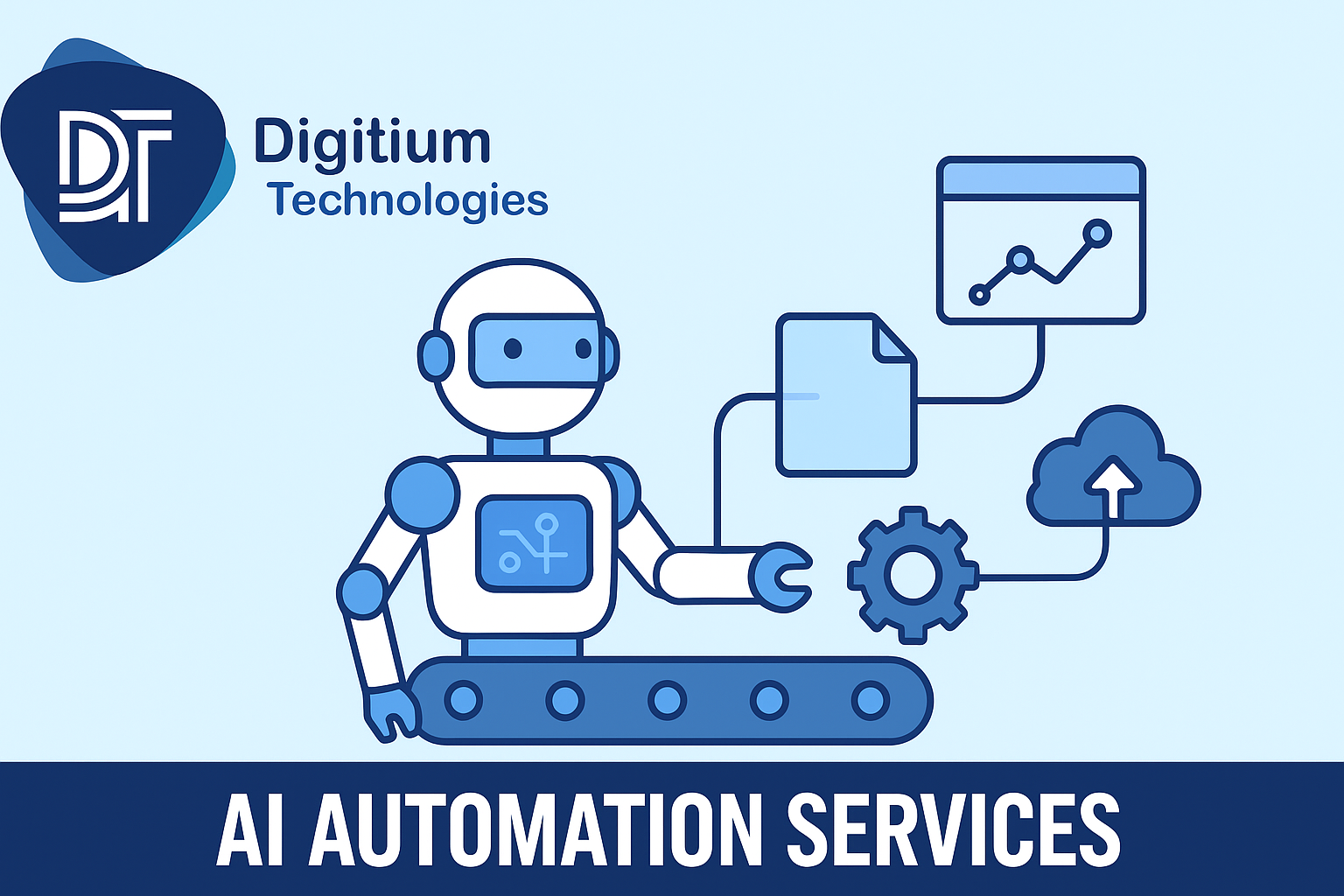
AI Automation means automating processes that were previously done by humans. Within this, machines can perform tasks starting from data analysis, decision making, generating reports, customer support, production, and also marketing. By way of example, AI-based chatbots in banking are addressing customer queries instantly; Robots in manufacturing industries are increasing the accuracy and speed of production; and automation tools are overpowering everyday technical tasks in IT companies.
2. The Future Workplace: Human + Machine Collaboration
The workplace into the future will be good “human machine” model. This means that humans and AI systems together will produce better results. Individuals will contribute making use of their creativity, strategic thinking and emotional intelligence. Whereas AI systems will handle fast data analysis, accurate decisions and repetitive tasks. On this collaboration, businesses don’t just become faster but can even be efficient and accurate.
3. The Role of AI Automation Services in Modern Industries
AI Automation Services have finally made their place in just about every field.
IT Sector: Tasks like network monitoring, code testing and data backup are receiving automated.
Healthcare: AI based systems are predicting diseases and suggesting treatment plans.
Manufacturing: Robotic process automation (RPA) is reducing the expense of production and improving quality.
Marketing and Customer Service: AI chatbots and predictive analytics are personalizing the consumer experience.
AI automation in all these areas have not only reduced human labor but also increased the productivity and speed manifold.
4. New Jobs and Skills in the Age of AI Automation
Many people believe AI automation will eliminate jobs, but unfortunately different. Yes, some traditional jobs will suffer, but new different types of jobs can also be created.
Like:
• AI Maintenance Engineers
• Data Analysts
• Automation Architects
• AI Trainers and Prompt Designers
All of these roles will need technical understanding, the opportunity to interpret data, and proficiency in dealing with digital tools. Inside future years, reskilling and upskilling will be words that may be a part of every professional's career.
5. How AI Automation Is Changing Work Culture
AI Automation Services are changing not only how work is conducted but also the work culture.
Remote Work: Working everywhere you look happens to be easier through AI tools.
24x7 operations: Automated systems can perform all the time without interruption.
Decision-driven data culture: Decisions will depend experience, but on data analytics.
Collaborative teams: Humans and machines making better decisions and innovating together.
Because of pretty much everything, businesses have recently become smarter, flexible and performance-oriented.
6. Key Benefits of AI Automation Services
Time Saving: Repetitive tasks are completed automatically by AI systems.
Reduction in human errors: Machines perform flawless data management.
Cost Reduction: Overhead staff pricing is reduced and procedures be efficient.
Faster decisions: AI analyzes data in real-time to generate instant suggestions.
Better customer experience: Chatbots and virtual assistants interact with customer needs instantly.
7. Challenges in the Path of AI Automation
While AI automation brings opportunities, furthermore, it brings some challenges —
Employment imbalance — Demand for low-skill jobs may decrease.
Data security and privacy — AI systems count on sensitive data.
Technological dependence – Excessive dependence on machines can limit decision making.
Ethical Questions—Will Machines Always Create the Right Decisions? This question is still under consideration.
8. Conclusion
AI Automation Services are redefining not able to the workplace. In the times into the future, cooperation between man and machine would be the critical for success. While machines can provide speed and efficiency, humans will add value to the work through creativity and ethical perspective. Therefore, anybody or business who can embrace this transformation increase itself with technologies would be the leader inside the future.