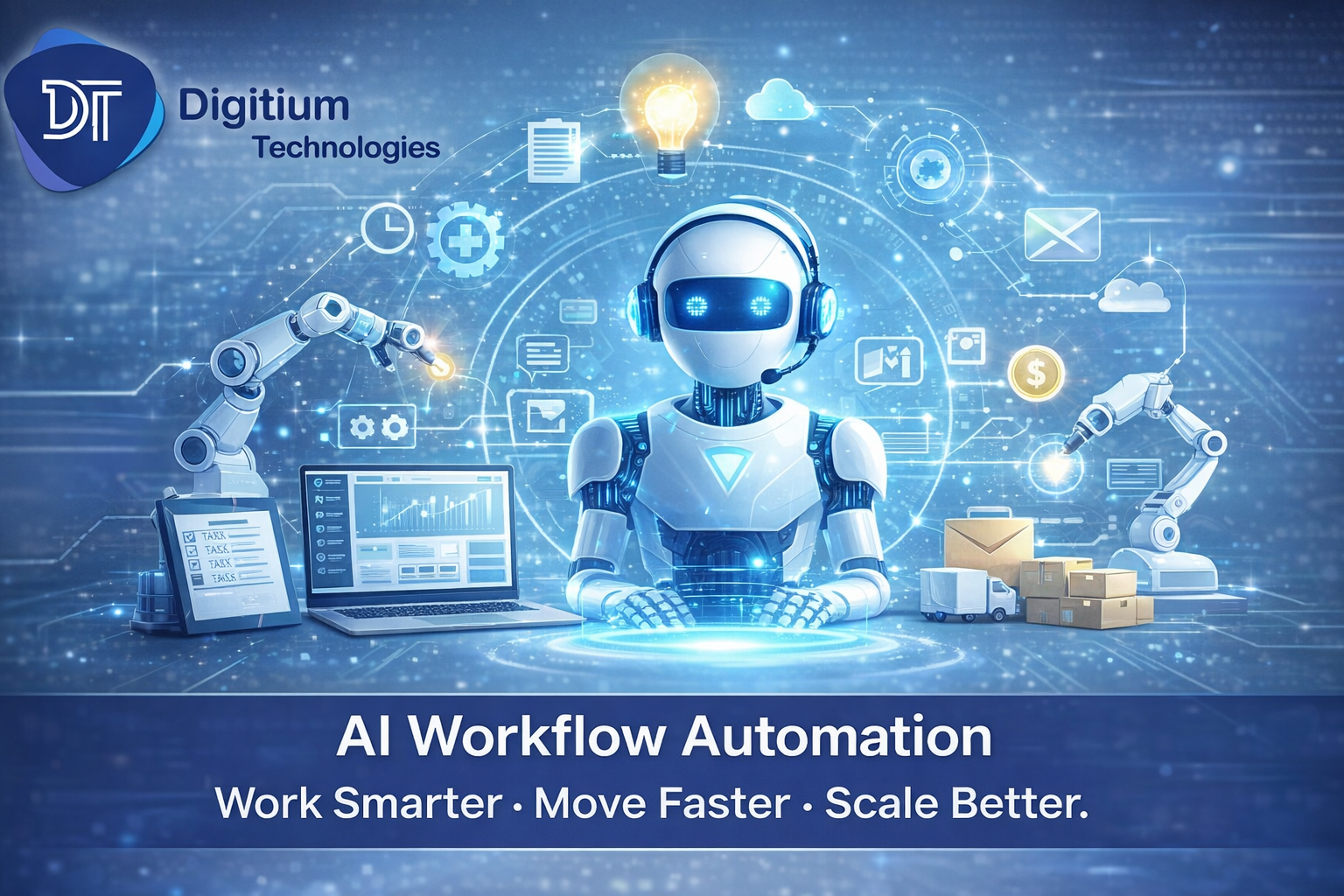
What Is AI Workflow Automation?
Basically, AI Workflow Automation uses artificial intelligence to automate repetitive tasks and manage business workflows with minimal human intervention. As an alternative to manually entering data, assigning work, or tracking processes, AI systems are designed for these tasks by studying under data patterns and making decisions in real time. As a result business processes faster, more accurate, and a lot more scalable.
Industry Moves Toward AI-Driven Work
A current announcement from ServiceNow shows how enterprise application is evolving to compliment intelligent workflows. At ServiceNow's annual conference, this company revealed a new workflow data ecosystem designed to power AI Workflow Automation with real-time intelligence. Their platform now connects data sources and enterprise systems so AI agents can make smarter decisions and act faster than before.
All at once, global reports are signaling a broader shift: enterprises need to go AI systems from pilot mode to full production in 2026. Leader’s state that as AI becomes more reliable and integrated, companies will expand automation across more departments.
Wall Street loan companies in addition have an illustration of live adoption. Firms like JPMorgan Chase and Goldman Sachs are using AI to automate internal workflow processes—like reporting, data analysis, and perhaps voting systems—saving thousands of work hours and improving operational efficiency.
Real Business Results
Real companies are seeing measurable impact through AI workflow tools. In line with recent data, global brands like Walmart and Coca-Cola have integrated AI systems into key business workflows to automate many methods from task prioritization to order processing.
As an illustration, Walmart deployed an AI assistant which enables you store associates with task planning and inventory workflows, reducing planning times significantly. Coca-Cola's AI-driven system accelerated order-to-cash processes, cutting manual steps by nearly 99% and saving millions of work hours.
These aren't isolated cases—they reflect a larger movement where businesses are not only adopting AI Workflow Automation, but will also recording meaningful gains in productivity and operational accuracy.
Benefits That Matter
Businesses that use AI workflow systems often report several consistent advantages:
• Reduced hard physical work, freeing employees to spotlight strategic work
• Fewer errors, since AI follows precise rules and learns from data
• Faster execution, with decisions and actions happening live
• Lower operational costs by removing inefficient tasks and processes
Businesses also benefit when AI helps teams make data-driven decisions faster—especially in areas like customer support or supply chain operations, where speed matters.
Challenges and Best Practices
While the pros are clear, its not all company finds success immediately. A standard challenge is integrating AI tools into existing workflows without clear change management. Poor data quality, unclear objectives, or lack of learning martial arts can slow results or cause implementation failures.
One important lesson from industry practice should be to don't start to large—focus using one key workflow, map it thoroughly, and introduce AI automation step by step. Strong governance and human oversight will also be essential to make sure that automated systems complement teams as an alternative to replace them—which you find in adoption smoother and a lot more sustainable.
Looking Ahead
Search involvement in workflow automation tools has reached multi-year highs, showing that businesses are actively researching ways to modernize operations. As large companies and small enterprises alike embrace tools that streamline internal processes, AI Workflow Automation continue to shift from a competitive benefits of a small business necessity.
In recent years ahead, companies that adopt thoughtful automation strategies are going to be better positioned to reduce costs, improve employee productivity, and deliver faster leads to customers.