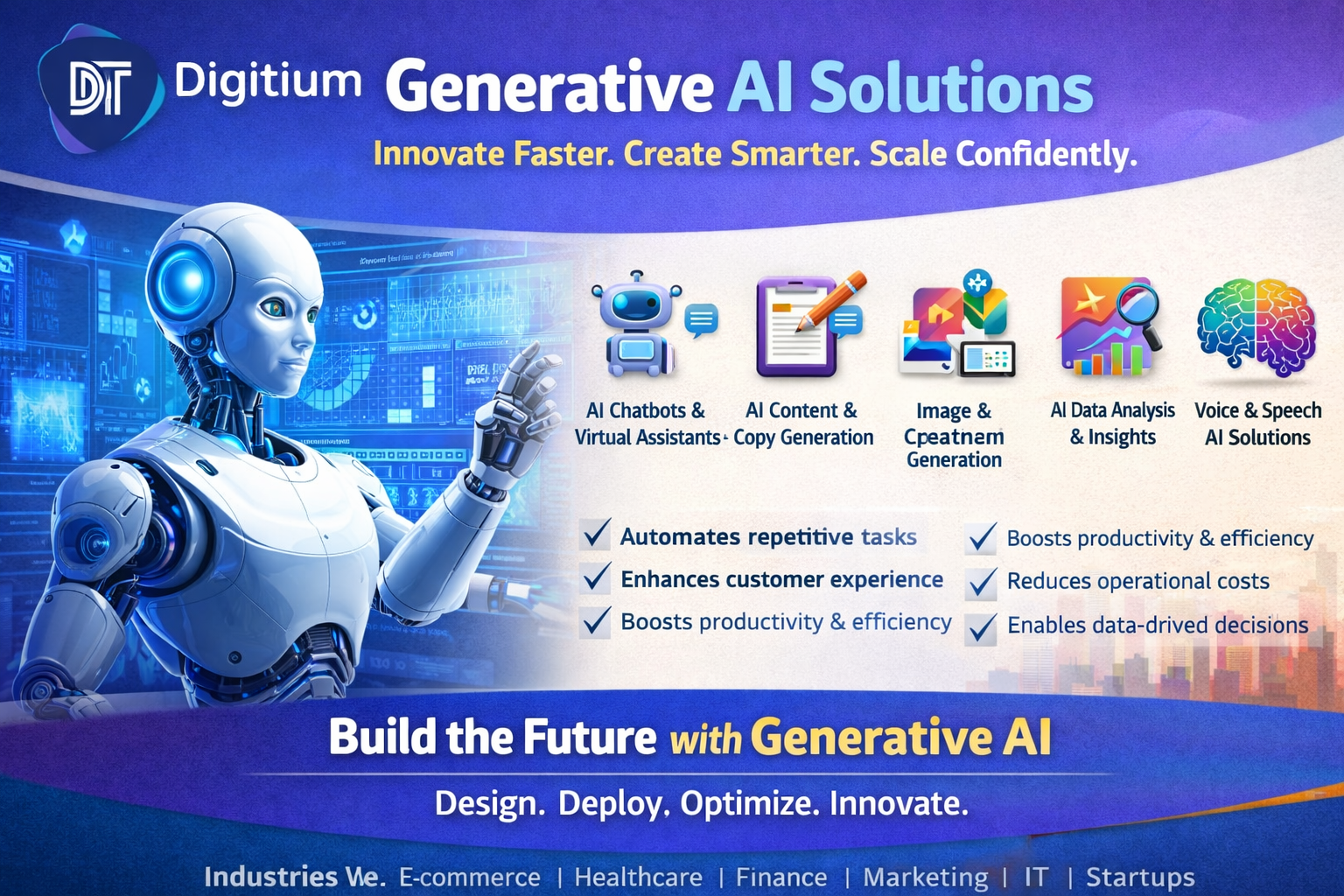
What Are Generative AI Solutions?
At its core, generative AI is the term for artificial intelligence systems that can produce new content — like text, images, audio, or video — depending on patterns learned from large datasets. Unlike traditional AI that focuses mainly on classification or prediction, generative AI generates outputs that mimic human creativity.
When we talk about Generative AI Solutions, we mean real software and systems that organizations deploy to fix everyday problems. These solutions include tools for automated writing, image creation, data analysis, and perhaps content personalization for customers.
Why Businesses Are Investing in Generative AI Solutions
One big reason businesses adopt generative AI is efficiency. Teams once spent hours writing reports, designing visuals, or analyzing data can use intelligent tools to complete these tasks faster. For instance:
• Marketing teams use AI to generate social media content that resonates with audiences.
• Customer care uses AI chat assistants that understand language and respond like humans.
• Data analysts use AI to decide complex spreadsheets into clear insights.
These are all types of Generative AI Solutions turning ideas into real work outcomes.
Recent Industry Developments in AI
The concept of generative AI is moving fast. During early 2026, several major industry updates showed exactly how quickly these technologies are evolving:
•Google upgraded its Veo video creation tool, making AI-generated videos more realistic and professional. This assists creators and marketers produce high-quality content faster than ever.
•Tata Consultancy Services (TCS) partnered with AMD to scale AI adoption in enterprises. Together they make an effort to take AI from pilot phase to full business deployment, by using a give attention to scalable and tailored generative AI solutions.
• Anthropic — an AI company — launched specialized products like Claude for Healthcare, signaling that generative AI is now more specialized and industry-ready.
These developments reveal that Generative AI Solutions are not theoretical ideas — they may be active technologies driving investment, product launches, and business strategy.
Real User Experience: How AI Helps in Daily Work
For many professionals, generative AI has already been element of daily workflow.
Take content creation: freelance home writers and marketers increasingly use AI assistants to draft blogs, social captions, and email content. Users report that AI helps overcome writer's block, suggests fresh ideas, and saves hours of editing time. This does not replace mcdougal but makes their work faster and even more consistent.
In support services, companies deploy AI chatbots that could answer common questions 24/7. For instance, support teams at mid-sized tech companies have noted that AI reduces response times and frees human agents for complex tasks.
In product design and development, AI tools help generate visual mockups or suggest user interface layouts depending on trends and data patterns. The end result? Faster prototyping and alignment between design and user needs.
Every one of these real world experiences illustrate how Generative AI Solutions squeeze into real workflows — making technology a helpful co-worker, not simply a tool.
Practical Use Cases across Industries
Healthcare: AI generates summaries of patient records and supports documentation. In clinics, doctors and nurses do not waste time when reports are automatically structured by AI.
Finance: Banks use generative AI for fraud detection and personalized financial advice. AI systems analyze patterns and flag suspicious transactions, improving both accuracy and speed.
Retail and E-commerce: AI assistants help online shoppers find products, suggest styles, and create personalized recommendations. Some platforms even automatically generate product descriptions and marketing content.
Enterprise Operations: Large firms use AI for data insight generation and internal automation — reducing workloads and improving operational decisions.
These examples reveal that Generative AI Solutions are not limited one field; they may be versatile tools with broad impact.
Challenges and Responsible Adoption
While generative AI brings many benefits, furthermore, it raises questions ethics, data privacy, and job displacement. Responsible use includes:
• Ensuring AI doesn't spread misinformation
• Protecting personal information and intellectual property
• Using human oversight to validate AI outputs
Companies increasingly balance innovation with safeguards, ensuring that AI tools help without creating harm or confusion.
Conclusion: The Future of AI Is Here
Generative AI has stopped being a little futuristic concept. Today's Generative AI Solutions are really the, practical, and business-ready. They guide professionals automate mundane tasks, spark creativity, to make smarter decisions. As technology continues to succeed, we expect AI-powered solutions for being all the more accessible, useful, and built-into everyday work.
Whether you are business leader, a creator, or a curious learner, understanding these solutions today means you're prepared to the opportunities they bring tomorrow.