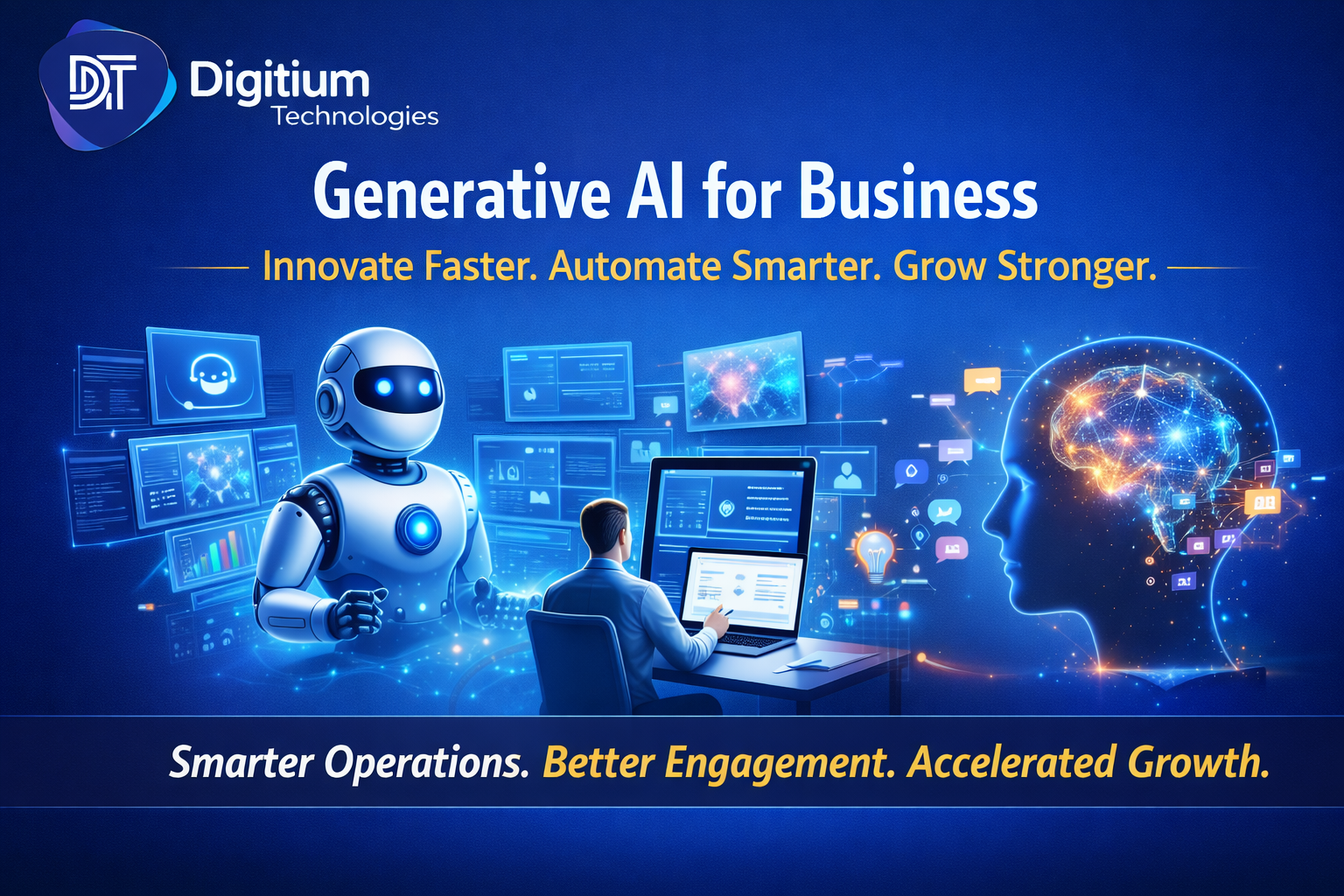
Why Generative AI Matters to Companies
At its core, Generative AI for Business helps organizations reduce repetitive work, speed up decision-making, and deliver better experiences to customers and employees. For example, large retail brands are exploring AI that can generate product descriptions and personalized marketing content automatically. This saves time and often improves consistency in messaging across digital channels.
A notable trend in 2026 shows that even consulting giants are deeply embracing generative AI. McKinsey & Company reported that out of 60,000 workers, around 25,000 are now “AI agents” — software programs that assist with analysis, research, and insights generation — showing how generative AI is reshaping internal workflows at scale.
Real Business Use Cases
There are many real-world examples of Generative AI for Business in action today:
1. Marketing and Creative Content
Global brands such as Coca-Cola are using AI to create campaigns and visual content with generative models, speeding up campaign creation and boosting engagement.
2. Design and Product Innovation
Manufacturers like BMW use generative AI to suggest new design ideas, helping teams iterate faster and explore creative possibilities without always relying on manual prototyping.
3. Financial and Advisory Services
In the financial sector, firms use generative AI to summarize complex reports and deliver curated insights. This enables financial advisors to spend less time on research and more on client strategy.
4. Customer Engagement
Retailers are enabling customers to interact and shop through AI platforms like generative chat assistants. For example, JD Sports plans to allow shoppers to make purchases directly through AI tools such as ChatGPT and Microsoft Copilot — a step that could reduce friction and create a more seamless buying journey.
Industry Growth and News
Recent industry data highlights both growth and challenges. While adoption of AI tools is rapidly increasing, security teams are warning that data policy violations related to AI more than doubled last year, showing the importance of governance and risk controls when deploying Generative AI for Business.
Still, companies across sectors continue experimenting with AI. Startups focused on AI video generation recently secured large investments, underscoring market confidence in generative AI technologies and their potential in areas like advertising and digital media.
How to Get Started
For business leaders thinking about Generative AI for Business, the approach should be thoughtful and strategic:
Start with defined use cases: Identify tasks that are repetitive, time-consuming, or data-heavy.
Balance automation with oversight: Always pair AI outputs with human review, especially for public-facing content.
Invest in skills and governance: Ensure your team understands both the opportunities and risks of AI use.
Conclusion
Generative AI for Business is transforming how companies create value — from automating routine tasks to improving customer engagement and sparking innovation. As adoption grows, organizations that combine practical implementation with strong oversight will be best positioned to benefit from this powerful technology.