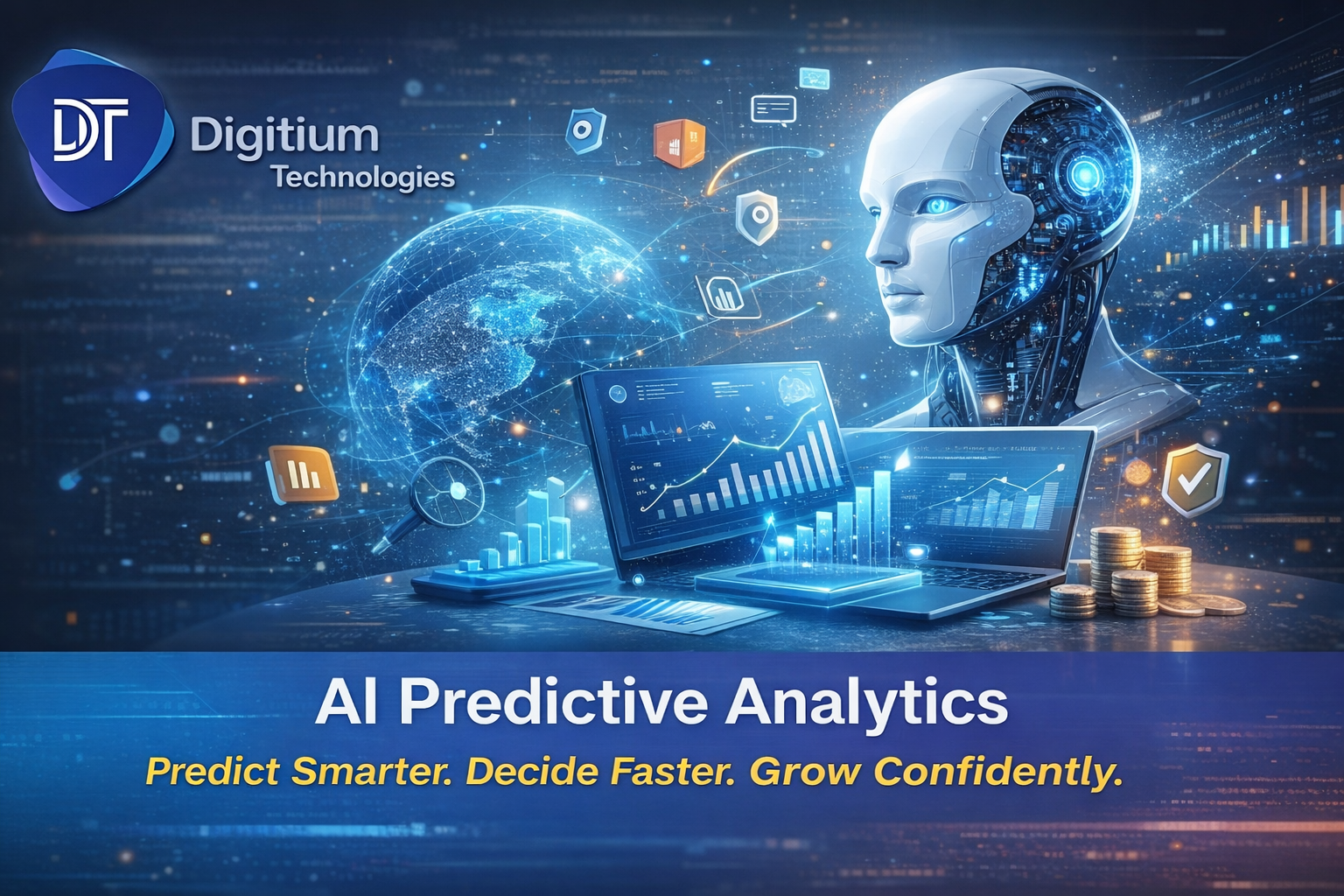
What Is AI Predictive Analytics?
AI Predictive Analytics uses artificial intelligence and machine learning algorithms to investigate past data and predict future events. It looks for patterns in data and uses these to respond to questions like: After that customers buy next? Will demand increase next month? Is there a chance fraud?
Unlike traditional analytics, AI models continuously learn and improve as increasing numbers of data becomes available.
Real-World Samples of AI Predictive Analytics
Retail: Internet retailers use predictive analytics to forecast product demand and steer clear of overstocking or shortages.
Banking: Banks predict fraudulent transactions in real time to guard customers.
Healthcare: Hospitals forecast patient admissions and manage staff efficiently.
Manufacturing: Predictive maintenance helps detect machine failures before they happen.
These examples show how AI predictive analytics turns data into actionable insights.
Key Important things about AI Predictive Analytics
• Better and faster decision-making
• Accurate sales and demand forecasting
• Reduced risks and operational costs
• Improved customer experience
• Higher revenue and profitability
By predicting outcomes early, businesses can plan smarter and grow ahead.
Practical Suggestions to Use AI Predictive Analytics Effectively
Start out with clean data: Good predictions need high-quality data.
Focus on a single goal: Start out with one particular use case like sales forecasting.
Use a proven method: Choose AI platforms that match your business size.
Combine human insight with AI: AI supports decisions, it won't replace humans.
Monitor and improve models: Regular updates improve accuracy over time.
Industries That Help the Most
AI predictive analytics is traditionally used in e-commerce, finance, healthcare, logistics, marketing, and SaaS businesses. Any industry that relies on data can benefit from it.
FAQs About AI Predictive Analytics
Q: Exactly what is the main purpose of AI predictive analytics?
Its main purpose is to predict future outcomes using historical and real-time data.
Q: Is AI predictive analytics expensive?
Costs vary, but cloud-based tools ensure it is affordable even for small businesses.
Q: How accurate is AI predictive analytics?
Accuracy is determined by data quality and model training, however it improves over time.
Q: Can smaller businesses use predictive analytics?
Yes, many tools were created designed for tiny and mid-sized businesses.
Conclusion
AI Predictive Analytics helps businesses predict smarter, decide faster, and grow confidently. Through the use of data-driven insights, companies can aid in eliminating risks, improve planning, and grow competitive within a rapidly changing market.