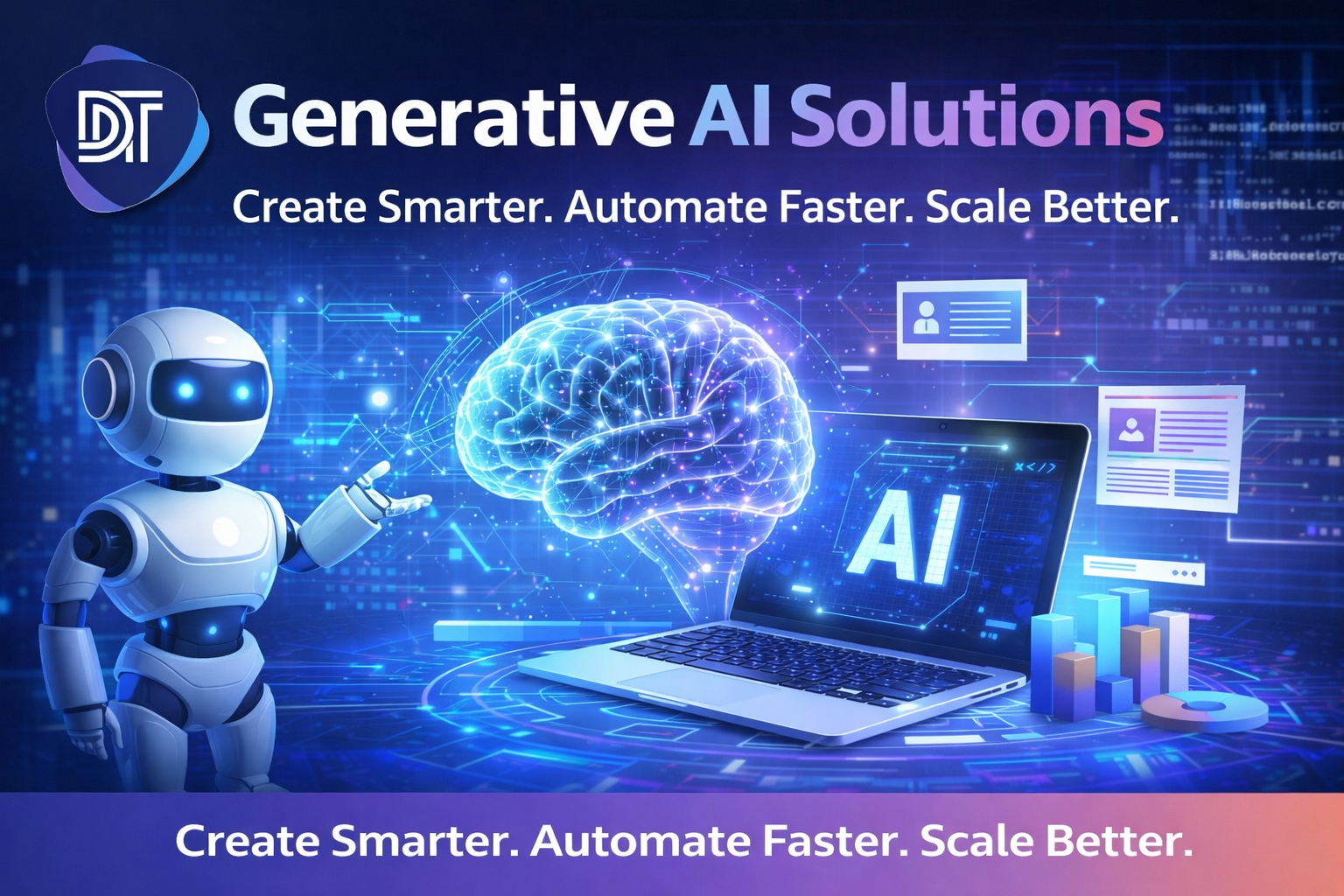
What Are Generative AI Solutions?
Generative AI solutions use trained models to create new content rather than simply analyzing existing data. Unlike traditional automation, generative AI can write articles, design visuals, generate software code, summarize documents, and even simulate human conversations. Popular examples include AI chatbots for customer support, content generators for marketing teams, and AI coding assistants used by developers to speed up application development.
Real-World Examples of Generative AI
Many global brands are already leveraging generative AI successfully. For example, e-commerce companies use AI-generated product descriptions to manage large catalogs efficiently. Media and marketing agencies rely on AI tools to draft ad copy, social media posts, and email campaigns at scale. In software development, tools like AI-powered code assistants help engineers reduce development time and minimize errors. Financial institutions use generative AI to create reports, analyze risk scenarios, and improve customer communication.
Key Benefits of Generative AI Solutions
Generative AI offers measurable business advantages. It significantly improves productivity by automating repetitive and creative tasks. Costs are reduced as teams rely less on manual content creation and support operations. Personalization becomes easier, enabling businesses to deliver tailored experiences across digital channels. Most importantly, generative AI supports scalability, allowing organizations to grow without proportionally increasing resources.
Industry Trends and News
Industry analysts predict rapid adoption of generative AI over the next few years. Gartner reports that by 2026, more than 80% of enterprises will use generative AI APIs or models in production environments. Meanwhile, governments and enterprises are investing heavily in responsible AI frameworks to address data privacy, security, and ethical concerns. These trends highlight the importance of choosing reliable, secure, and transparent generative AI solutions.
Practical Tips for Implementing Generative AI
To maximize value, businesses should start with clear use cases such as customer support automation or content generation. Data quality is critical, as models perform best with clean, relevant datasets. Integrating AI solutions with existing systems ensures smoother adoption. Finally, companies should prioritize governance, monitoring outputs for accuracy, bias, and compliance with regulations.
Conclusion
Generative AI solutions are redefining how businesses operate and compete in the digital era. By combining automation, creativity, and intelligence, they unlock new opportunities for efficiency and innovation. Organizations that adopt generative AI strategically today will be better positioned to lead their industries tomorrow.