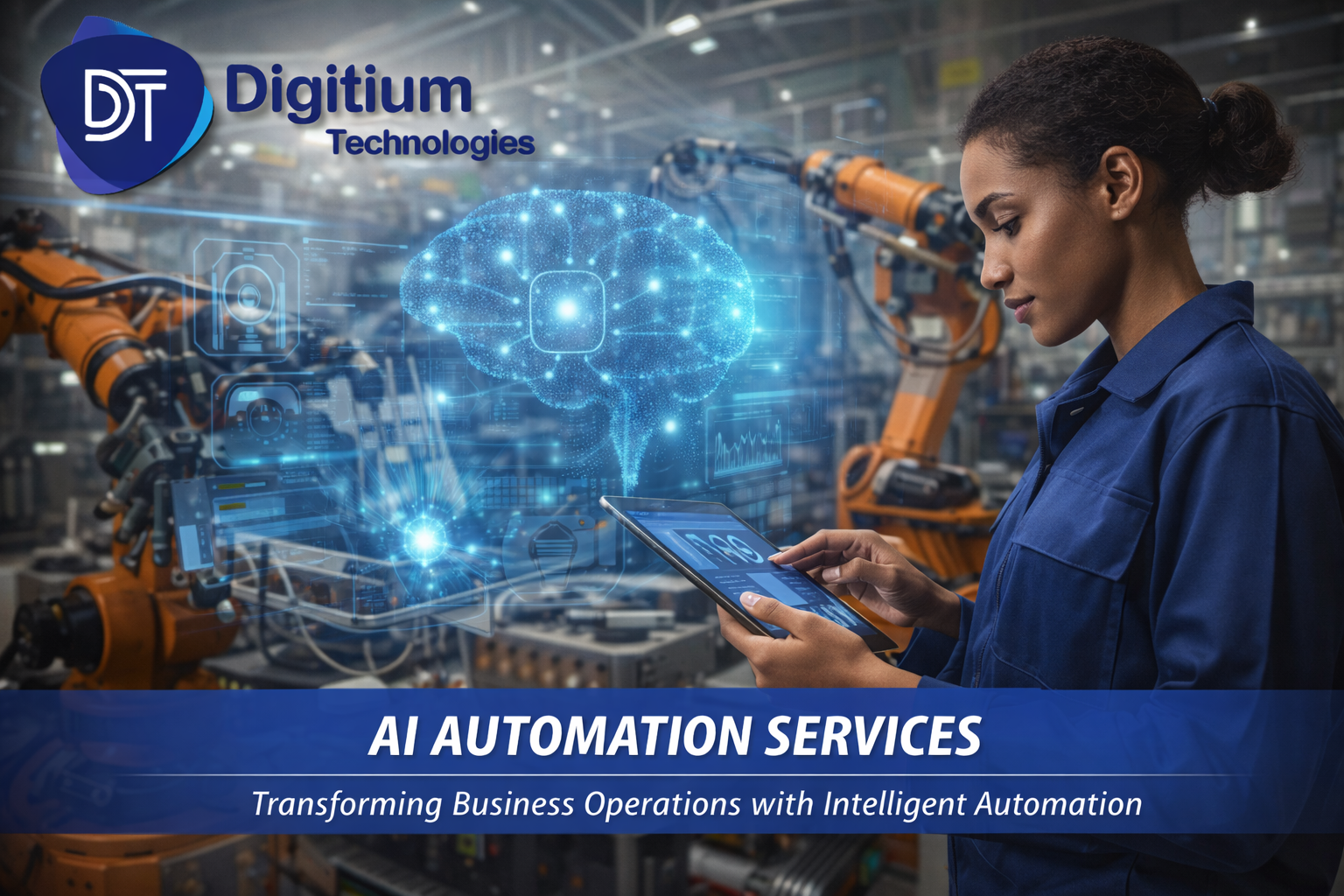
What Are AI Automation Services?
AI Automation Services combine Artificial Intelligence (AI), Machine Learning (ML), and Robotic Process Automation (RPA) to automate business processes intelligently. Unlike traditional automation, AI-driven systems can analyze data, learn patterns, and make informed decisions in real time.
For example, financial institutions use AI automation to process loan applications by analyzing credit scores, verifying documents, and detecting fraud within minutes. In e-commerce, AI tools automatically manage inventory forecasting and personalize customer recommendations based on browsing behavior.
Real-World Applications Across Industries
AI automation is making a measurable impact in multiple sectors:
• Banking & Finance: Fraud detection systems powered by AI analyze thousands of transactions per second to identify suspicious activity.
• Healthcare: Hospitals use AI automation to manage patient scheduling, medical billing, and diagnostic assistance.
• Manufacturing: Smart factories deploy AI-powered robots for predictive maintenance, reducing downtime and improving operational efficiency.
• Customer Service: AI chatbots handle 70–80% of routine customer queries, allowing human agents to focus on complex issues.
Major enterprises such as Amazon and Tesla have publicly demonstrated how automation and AI-driven analytics enhance operational excellence and innovation.
Industry Trends Driving AI Automation Growth
Recent industry news highlights accelerated AI adoption due to advancements in generative AI, cloud computing, and big data analytics. Organizations are increasingly integrating AI into enterprise resource planning (ERP) and customer relationship management (CRM) systems.
Cloud-based AI platforms now allow small and mid-sized businesses to implement automation without heavy infrastructure investment. Additionally, governments worldwide are promoting AI innovation through digital transformation initiatives, further accelerating adoption.
Key Benefits of AI Automation Services
Implementing AI automation delivers several strategic advantages:
• Reduced operational costs
• Faster process execution
• Improved accuracy and compliance
• Enhanced customer experience
• Scalable and flexible operations
Businesses leveraging predictive analytics can also make proactive decisions instead of reactive ones, gaining a competitive edge in dynamic markets.
Practical Tips for Implementing AI Automation
1. Start with Process Assessment: Identify repetitive, rule-based tasks suitable for automation.
2. Define Clear KPIs: Measure ROI through productivity, cost savings, and accuracy improvements.
3. Choose the Right Technology Partner: Work with experienced AI consultants to ensure seamless integration.
4. Focus on Data Quality: AI systems depend on accurate, well-structured data.
5. Train Your Workforce: Upskill employees to collaborate effectively with AI-powered systems.
The Future of Intelligent Automation
AI Automation Services will continue evolving with advancements in deep learning, natural language processing, and autonomous systems. Businesses that invest early in intelligent automation position themselves for sustainable growth, operational resilience, and digital leadership.
In an increasingly data-driven world, AI automation is not just about efficiency—it is about redefining how organizations innovate and deliver value.