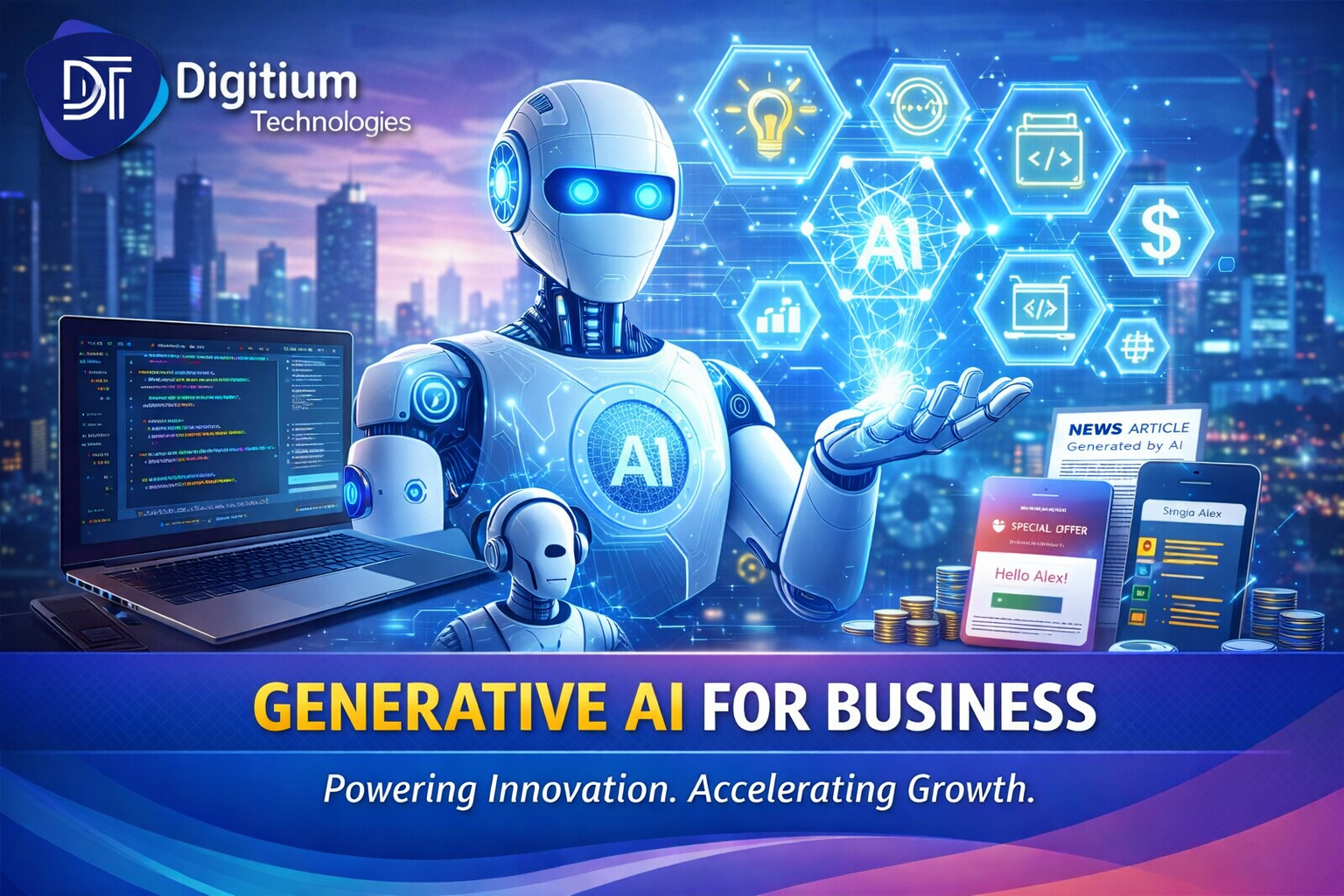
What Is Generative AI?
Generative AI refers to advanced artificial intelligence models capable of creating new content, including text, images, code, audio, and data insights. Unlike traditional automation tools, generative AI systems learn patterns from large datasets and generate human-like outputs. Technologies such as large language models (LLMs) and AI image generators are now widely adopted in enterprise environments.
Major tech companies like Microsoft and Google have integrated generative AI into their productivity suites, enabling businesses to automate documentation, generate reports, and enhance collaboration.
Real-World Examples of Generative AI in Business
1. Customer Support Automation
Many eCommerce companies use AI chatbots to handle common queries, reducing response times and operational costs. For example, online retailers deploy AI assistants to provide 24/7 customer service, improving satisfaction rates.
2. Marketing and Content Creation
Marketing teams use generative AI tools to draft blog posts, social media captions, email campaigns, and ad copy. This accelerates campaign launches while maintaining brand consistency.
3. Product Design and Development
Manufacturing companies apply AI-driven generative design to create optimized product prototypes. This reduces design cycles and material costs.
4. Software Development
AI coding assistants help developers generate code snippets, debug errors, and improve productivity, significantly reducing development timelines.
Industry Trends and Recent Developments
The adoption of generative AI for business has accelerated due to advancements in cloud computing and machine learning infrastructure. Enterprises are increasingly investing in AI governance frameworks to ensure responsible AI use. Additionally, businesses are focusing on AI-driven personalization, enabling tailored product recommendations and dynamic pricing strategies.
According to market analysts, companies that strategically adopt AI technologies are more likely to outperform competitors in revenue growth and operational efficiency over the next five years.
Key Benefits of Generative AI for Business
• Increased operational efficiency
• Reduced manual workload
• Faster time-to-market
• Improved customer engagement
• Data-driven decision-making
• Scalable innovation
These advantages make generative AI a powerful tool for startups and large enterprises alike.
Practical Tips for Implementing Generative AI
1. Start with Clear Objectives – Identify specific business problems AI can solve.
2. Ensure Data Quality – High-quality data improves AI accuracy and performance.
3. Prioritize Security and Compliance – Protect sensitive data and follow regulatory guidelines.
4. Train Your Workforce – Upskill employees to effectively use AI-powered tools.
5. Measure ROI Continuously – Track performance metrics to optimize AI investments.
The Future of AI-Powered Enterprises
Generative AI is not just a trend—it is a strategic business enabler. As technology continues to evolve, organizations that embrace AI-driven innovation will gain sustainable growth and long-term competitive advantage.
Businesses ready to adopt generative AI today are positioning themselves as leaders in tomorrow’s digital economy.