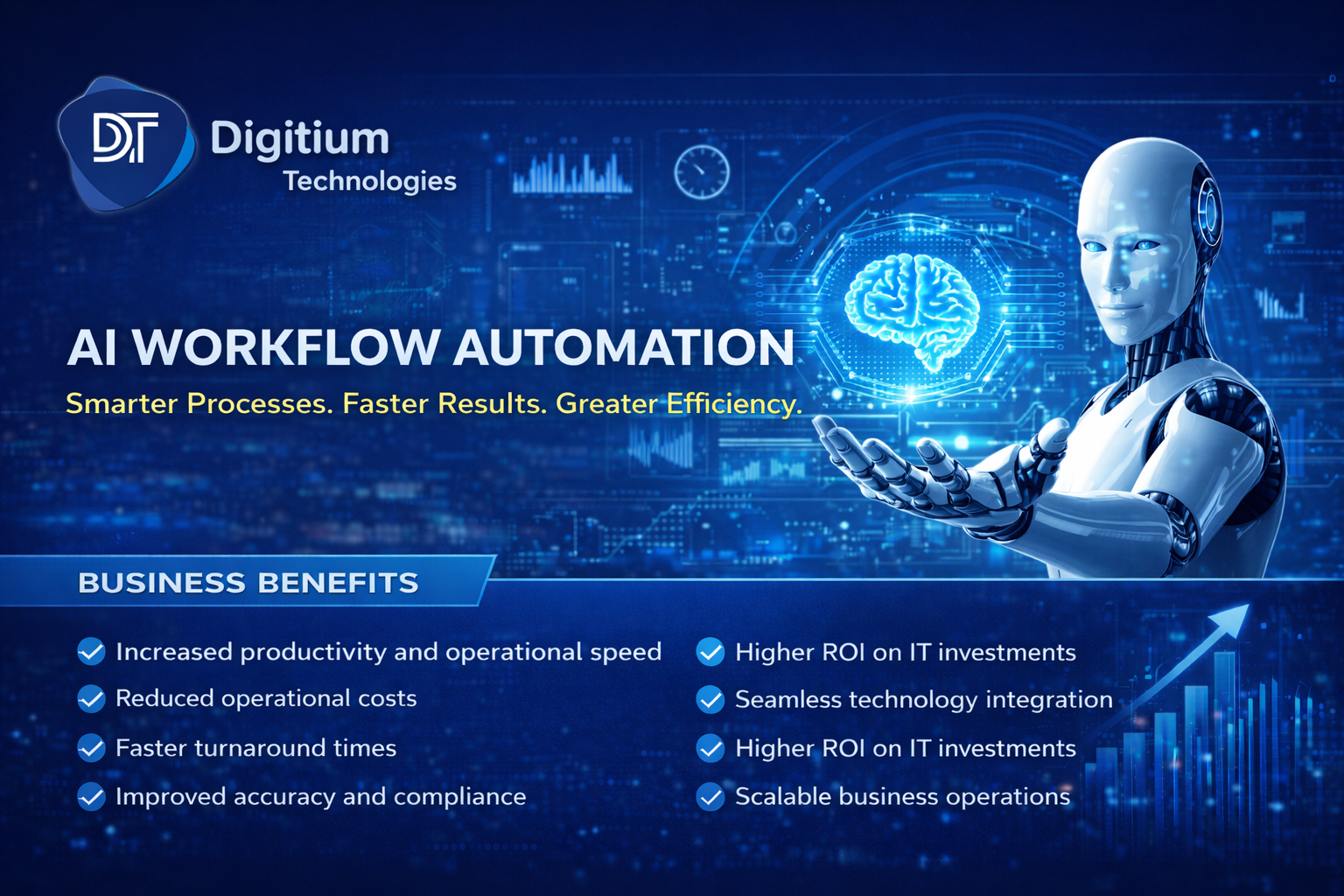
Industry News: The Shift to "Agentic" Systems
Recent industry developments highlight a massive departure from basic Robotic Process Automation (RPA) toward comprehensive AI workflow automation. We have officially entered the era of Agentic AI. Unlike traditional automation built on rigid "if-then" logic, modern autonomous agents assess context, make probability-based decisions, and execute multi-step processes across integrated enterprise systems.
Market research indicates that forward-thinking enterprises are rapidly adopting these agents to handle up to 80% of routine business approvals. Furthermore, embedded continuous compliance has become a standard feature. Rather than waiting for annual audits, modern AI systems continuously analyze data trails in real time, instantly flagging anomalies and drastically reducing the cost and likelihood of data breaches.
Real-World Examples Across Key Industries
The theoretical benefits of intelligent AI workflow automation are translating into highly measurable ROI across various global sectors:
• Financial Services: Banks are moving far beyond manual data entry. AI now seamlessly handles complex workflows like Know Your Customer (KYC) validation, transaction monitoring, and fraud detection. By identifying anomalies in real time and routing only the complex exceptions to human analysts, financial institutions are cutting processing costs by up to 30%.
• Logistics and Supply Chain: The days of static route planning are over. Logistics firms use AI to continuously sense and predict disruptions. Intelligent workflows automatically trigger inventory replenishment orders, dynamically reroute deliveries based on live weather or traffic data, and update supplier communications without requiring human intervention.
• Human Resources: HR departments are finally eliminating administrative bottlenecks. Implementing AI workflow automation means systems now automatically screen resumes, match candidates to job requirements, and orchestrate the entire onboarding process. When a candidate is hired, the system autonomously provisions software licenses, generates compliance checklists, and schedules orientation meetings.
Practical Tips for Successful Implementation
Deploying AI workflow automation requires more than just purchasing new software; it requires a highly strategic approach. Here are practical tips to ensure a successful, ROI-positive rollout:
1. Start with High-Impact, Predictable Processes: Do not attempt to automate your most complex operations on day one. Identify time-consuming, highly repetitive tasks—such as invoice processing or tier-one customer support routing—to secure quick wins and build internal momentum.
2. Prioritize API-First Integration: An intelligent workflow is only as effective as the data it can access. Choose automation platforms with robust API capabilities that can seamlessly connect your existing CRM, ERP, and legacy databases into a unified, accessible orchestration layer.
3. Establish "Human-in-the-Loop" Governance: AI scales efficiency perfectly, but it can also scale errors if left entirely unchecked. Build governance into your workflows from the very beginning. Allow AI to handle the heavy lifting, but strictly route high-stakes decisions and edge cases to human experts for final approval.
Conclusion: Embracing the Future of Intelligent Operations
As we navigate 2026, AI workflow automation is no longer a luxury for tech giants; it is a fundamental survival tool for any data-driven enterprise. The transition from static, manual processes to dynamic, autonomous orchestration allows organizations to scale at speeds previously thought impossible. By integrating agentic AI into your core operations, you aren't just saving time—you are building a resilient, self-optimizing business model that can pivot as fast as the market demands.
The journey toward full automation is iterative. By starting with high-impact use cases, prioritizing clean data integration, and maintaining human oversight, your organization can successfully bridge the gap between traditional labor-intensive tasks and the future of intelligent work. The competitive edge of tomorrow belongs to those who automate the routine today.