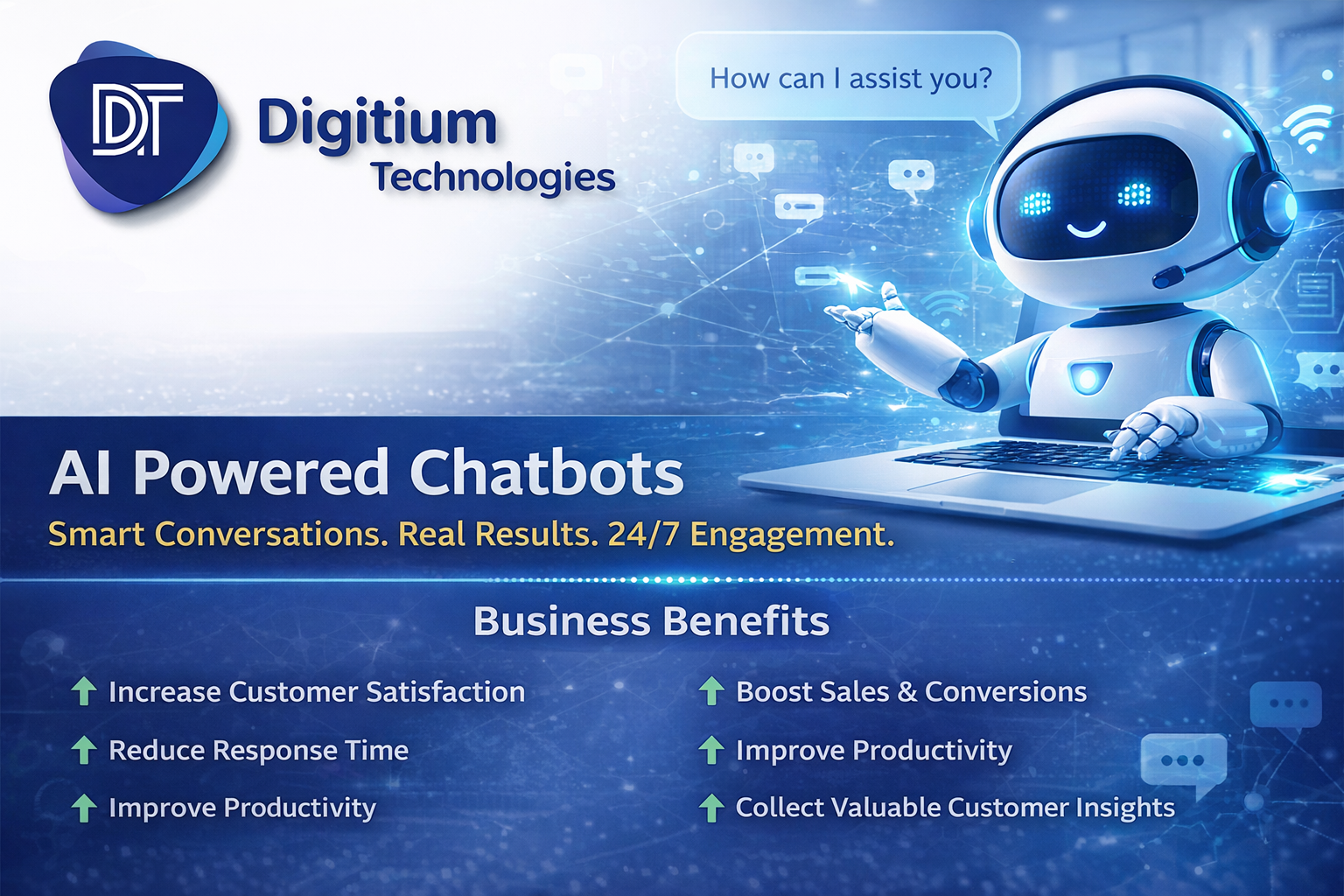
Industry News: The Rise of Agentic AI
The major headline for 2026 is the emergence of Agentic AI. According to recent industry reports, over 33% of enterprise applications now feature autonomous agents capable of multi-step reasoning. Microsoft and OpenAI have recently introduced "Agent Modes" that allow AI powered chatbots to navigate the web, compare vendor pricing, and even book travel—all while adhering to strict corporate security protocols. This shift is expected to save global businesses nearly $80 billion annually as support centers move from "stalling" widgets to "solving" agents.
Real-World Examples of AI Chatbots in Action
Businesses are no longer just "using" bots; they are hiring them as digital teammates.
• Klarna’s Efficiency Spike: In a landmark 2025-2026 case study, Klarna’s AI assistant performed the work equivalent to 700 full-time agents, handling two-thirds of all customer service chats and improving resolution accuracy by 25%.
• Retail Personalization: Sephora and L’Oréal have integrated augmented reality with their AI-powered chatbots, allowing users to "try on" makeup via a selfie while the bot analyzes skin tone to suggest products.
• Banking Precision: Bank of America’s Erica now assists over 10 million users monthly, shifting from simple balance checks to complex
financial advice and fraud detection.
5 Practical Tips for Implementing AI Chatbots
To stay competitive in 2026, your chatbot strategy must be strategic rather than just technical:
1. Prioritize RAG (Retrieval-Augmented Generation): Ensure your bot is grounded in your specific company data to prevent "hallucinations" and provide accurate, brand-safe answers.
2. Focus on Multi-Step Reasoning: A modern bot shouldn't just say "I'll forward this." It should have the API permissions to actually change a shipping address or process a refund.
3. Implement Seamless Handoffs: Use AI powered chatbots as the first line of defense, but ensure a "human-in-the-loop" protocol for high-value or emotionally sensitive issues where empathy is key.
4. Optimize for Voice and Vision: With voice assistants becoming the primary interface for many, ensure your bot can process spoken queries and visual inputs (like scanning a QR code).
5. Adhere to the EU AI Act: In 2026, transparency is law. Ensure your customers know they are talking to an AI to maintain trust and legal compliance.
Conclusion: A Necessity for Growth
As we navigate 2026, AI powered chatbots are no longer an optional luxury—they are a fundamental requirement for sustainable growth. By moving away from "mechanical" keyword responses toward "semantic" intent understanding, businesses can build deeper trust and capture revenue that would otherwise be lost to friction. To win in this era, focus on high-quality data and "human-AI collaboration" rather than total replacement. Organizations that treat their AI powered chatbots as evolving digital employees will see the highest returns in both customer loyalty and operational agility.