What is AI Predictive Analytics?
AI Predictive Analytics uses machine learning algorithms, statistical modeling, and data mining techniques to analyze historical data and predict future events. Unlike traditional reporting tools that give attention to past performance, predictive analytics provides forward-looking insights.
For example, e-commerce companies use predictive models to anticipate customer purchasing behavior, while banks count on AI to detect fraudulent transactions in real time. Based on recent industry reports, global investment in AI analytics solutions continues to go up as organizations prioritize data-driven strategy and automation.
Why AI Predictive Analytics Matters for Businesses
Businesses today operate in a rapidly evolving digital environment. Consumer behavior changes quickly, and market conditions fluctuate constantly. Implementing AI Predictive Analytics helps organizations:
• Improve forecasting accuracy
• Reduce operational risks
• Enhance customer personalization
• Optimize inventory and supply chains
• Increase profitability
An operating example can be viewed in retail. Major online platforms use predictive analytics to recommend products based on browsing history and buying patterns. This not just improves customer experience but also increases average order value.
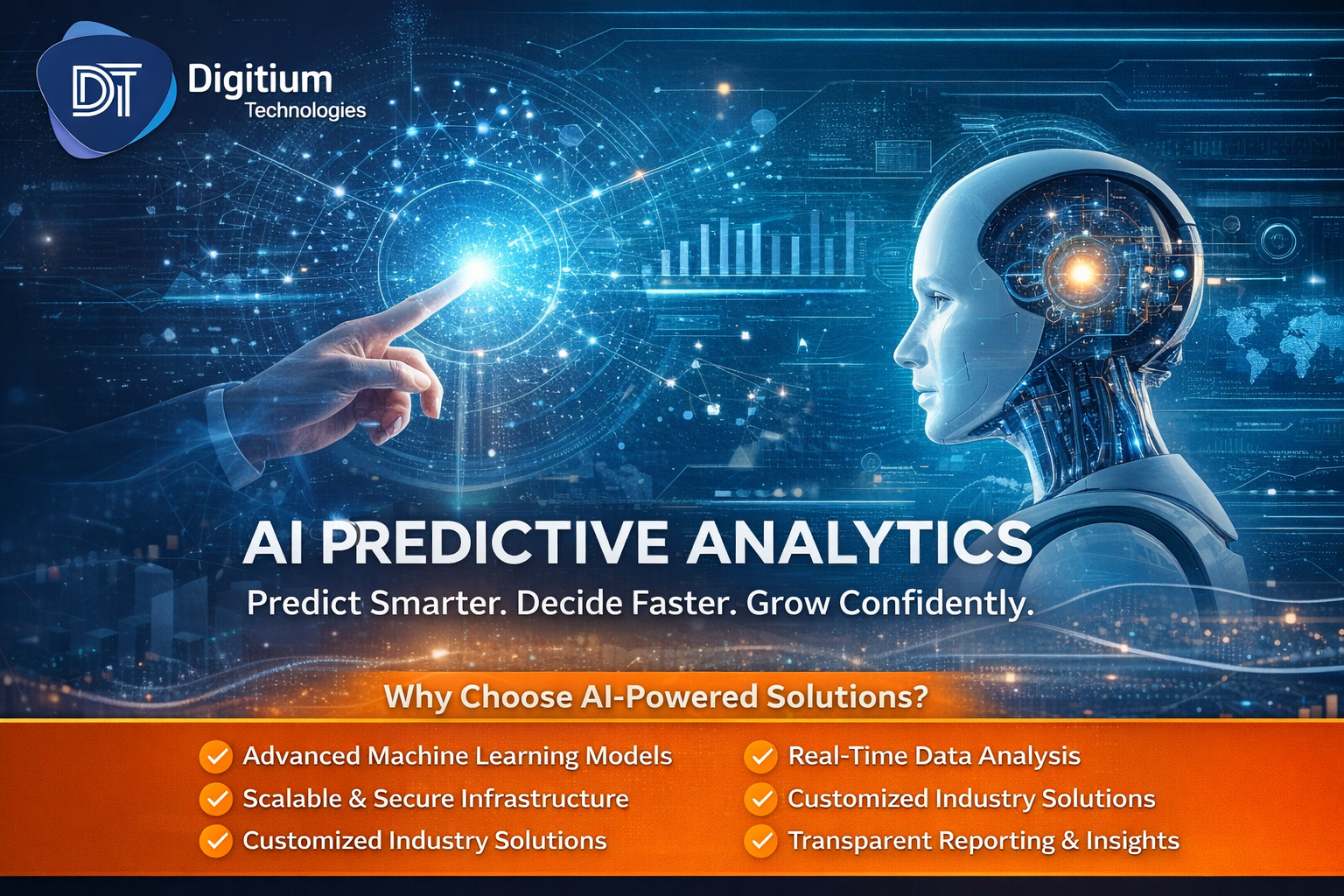
Why Choose AI-Powered Solutions?
Choosing AI powered predictive systems provides several competitive advantages:
Advanced Machine Learning Models
Modern predictive systems leverage deep learning and neural networks to recognize complex data patterns. These models continuously learn and improve as more data becomes available, ensuring higher accuracy over time.
Real-Time Data Analysis
Real-time analytics enables businesses to respond instantly to emerging trends or risks. For example, financial institutions use real-time predictive monitoring to flag suspicious transactions within seconds.
Scalable & Secure Infrastructure
Cloud-based AI platforms allow businesses to scale operations efficiently without investing heavily in hardware. Secure infrastructure ensures compliance with data protection regulations while safeguarding sensitive information.
Customized Industry Solutions
Different industries have unique challenges. Healthcare organizations use predictive analytics to forecast patient readmissions, while manufacturing companies put it to use for predictive maintenance to avoid equipment failure.
Transparent Reporting & Insights
Clear dashboards and reporting tools provide actionable insights that leadership teams can quickly interpret. Transparency builds trust and ensures better strategic planning.
Real-World Applications across Industries
AI Predictive Analytics has already been delivering measurable results worldwide:
Healthcare: Predicting disease risk and improving treatment planning.
Finance: Enhancing credit scoring models and fraud detection systems.
Marketing: Identifying high-value leads and predicting customer churn.
Supply Chain: Improving demand forecasting and reducing stock shortages.
For example, streaming platforms use predictive algorithms to recommend content based on viewing history. This personalization increases engagement and retention rates significantly.
Practical Tips for Implementing AI Predictive Analytics
If your organization is considering adoption, follow these practical steps:
• Define clear business objectives before purchasing technology.
• Ensure high-quality, clean data for accurate predictions.
• Choose scalable cloud-based platforms.
• Start with pilot projects before full implementation.
• Continuously monitor and refine predictive models.
Successful implementation depends not just on technology but also on strategic alignment and skilled data professionals.
The Future of AI Predictive Analytics
Industry trends indicate that predictive analytics will be automated and integrated with AI-driven decision systems. As machine learning models grow more sophisticated, businesses will rely a lot more on predictive insights for competitive advantage.
Firms that adopt AI Predictive Analytics early gain better forecasting capabilities, improved operational efficiency, and enhanced customer satisfaction. In a global where data is an ideal asset, predictive intelligence is no longer optional—it's essential.
Conclusion
AI Predictive Analytics empowers organizations to predict smarter, decide faster, and grow confidently. With advanced machine learning models, real-time data analysis, scalable infrastructure, customized industry solutions, and transparent reporting, AI-powered systems provide measurable business value. As competition intensifies across industries, adopting predictive analytics is an ideal investment that drives long-term success and sustainable growth.