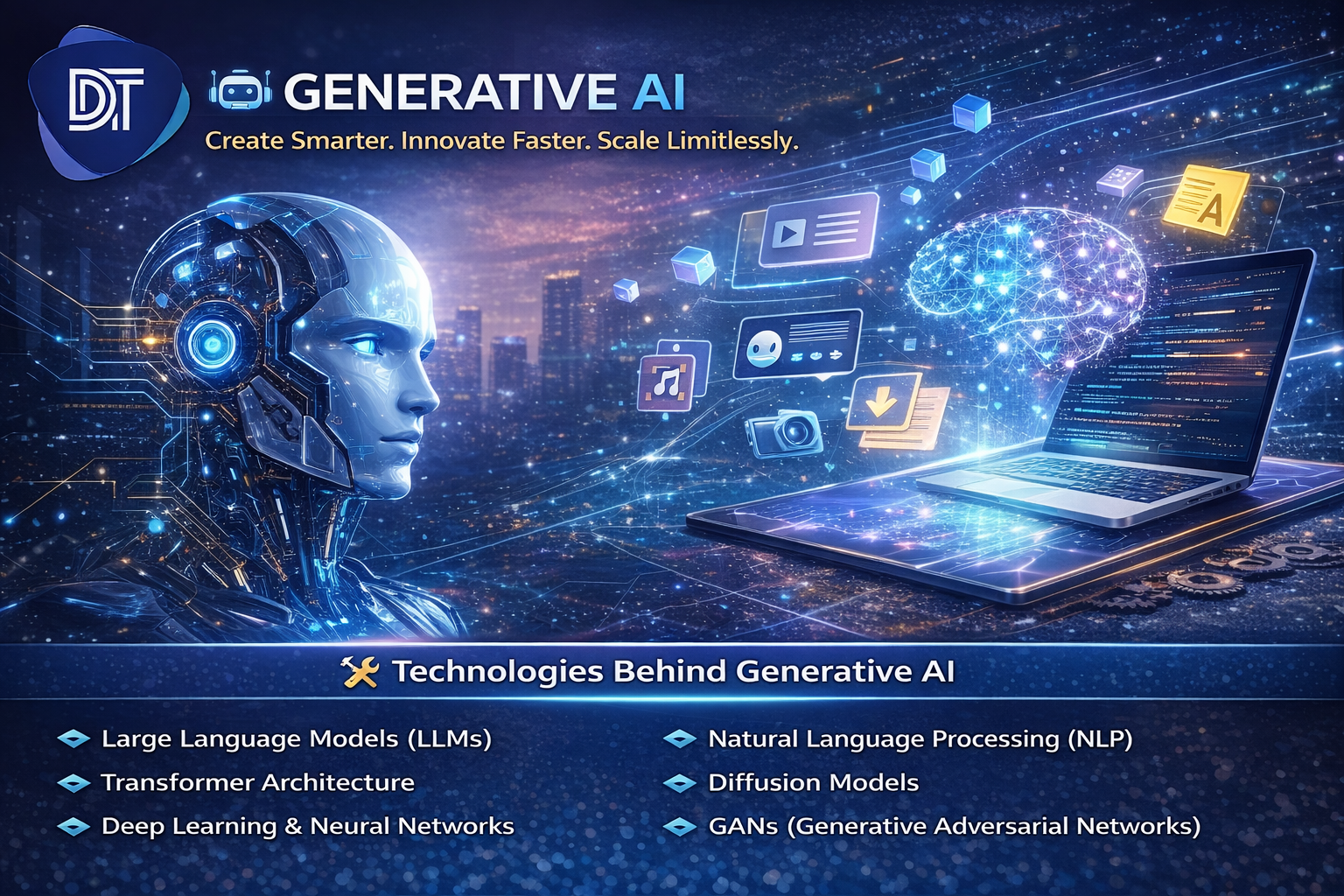
During this blog post, we'll explore what generative AI is, how real companies are deploying it, and why it's becoming very important to modern business.
What Is Generative AI?
Generative AI represents a sort of artificial intelligence which may produce new content — for instance text, images, and code — influenced by patterns it learns from data. Unlike traditional AI that analyzes or classifies information, generative AI produces something new.
As an example, tools like ChatGPT and AI image generators create text and visuals that feel creative and responsive. This equipment are part on the greater a number of technologies that guide businesses automate tasks once performed by humans.
Today, Generative AI can be used in areas like marketing, support services, design, and software development.
Industries Adopting Generative AI
Content Creation and Marketing
On the list of fastest-growing uses of generative AI is a content creation. Marketing teams use AI tools to draft websites, social media copies, and campaign taglines. For many companies, this means faster campaigns and more content with less manual effort.
Particularly, a mid-sized e-commerce company reported reducing content development time by 50% after integrating Generative AI with their workflow. In place of spending too much time writing product descriptions, they now get polished drafts within minutes.
Customer Support
Support services teams are taking advantage of generative AI. AI powered chatbots and virtual assistants can interact with common customer questions instantly. This improves response times and lets human agents target more technical problems.
A considerable telecom provider shared that after adopting AI chat tools, over 70% of customer queries were resolved automatically, producing enhance satisfaction scores.
Design and Creative Work
Design teams are utilizing generative AI tools to brainstorm ideas and visualize concepts quickly. As an example, AI image generators can draft mockups or creative visuals that designers refine later.
An inventive agency used Generative AI to create initial design drafts for client presentations. This helped their team check out other great ideas a lot sooner, boosting creativity and productivity.
Key Benefits associated with Generative AI
Faster Output
One of several reasons great things about generative AI is speed. Tasks once took hours — like writing, editing, or designing — is already put in minutes. This provides team’s added time because of it to think strategically instead of manually executing tasks.
Cost Efficiency
Companies using Generative AI often see cost reductions because repetitive work gets automated. As an example, small enterprises can produce marketing collateral without having to hire extra staff, and big corporations can scale content production without increasing headcount.
Personalization at Scale
Generative AI enables companies to tailor messages for specific users. As an example, an on-line education platform used AI to provide personalized learning paths for folks, improving engagement and completion rates.
Real Challenges and How Businesses Overcome Them
While generative AI offers many perks, furthermore, it poses challenges:
• Quality Control: AI output sometimes needs human review.
• Ethical Use: Companies must ensure content articles are fair and unbiased.
• Security: Using AI with sensitive data requires strong protection.
To take care of these problems, many organizations combine AI with human oversight. This ensures productivity and keeps quality and trust.
Many teams also train staff towards the responsible using technology, especially if deploying Generative AI that interacts directly with customers.
The Future of Generative AI
Struggling to generative AI looks promising. Analysts predict that by 2028, over 50 percent of worldwide enterprises make use of AI tools in at the least three core business functions. As models improve and computing costs decrease, Generative AI may be more powerful and wanted to businesses of most sizes.
Leading AI companies are emphasizing ethical and secure AI development, confirming that businesses can harness innovation responsibly.
Conclusion
Generative AI is reshaping how companies create, automate, and deliver products and services. If it is generating content, supporting customers, or aiding creative work, real businesses are already seeing measurable benefits.
If you're exploring new ways to boost productivity and innovation, adopting Generative AI generally is a solid step forward — assisting you in work smarter, faster, sometimes more creatively in a competitive landscape.