What is AI for Enterprise?
AI for enterprise refers to the use of artificial intelligence technologies such as machine learning, automation, and data analytics within large organizations. These tools help businesses analyze huge amounts of data, automate repetitive tasks, and improve overall performance.
Unlike basic automation, enterprise AI systems can learn, adapt, and provide insights that support strategic decisions across departments.
Real Industry Examples of AI Adoption
Many companies are already seeing real results from AI for enterprise:
• A global travel technology company reduced IT support calls by 44% using AI assistants.
• Financial institutions are using AI to automate complex processes like reporting and transactions, reducing errors by up to 94%.
• AI platforms like Glean help employees quickly find and use company data, improving productivity across teams.
These examples show how AI is not just theory—it delivers measurable business value.
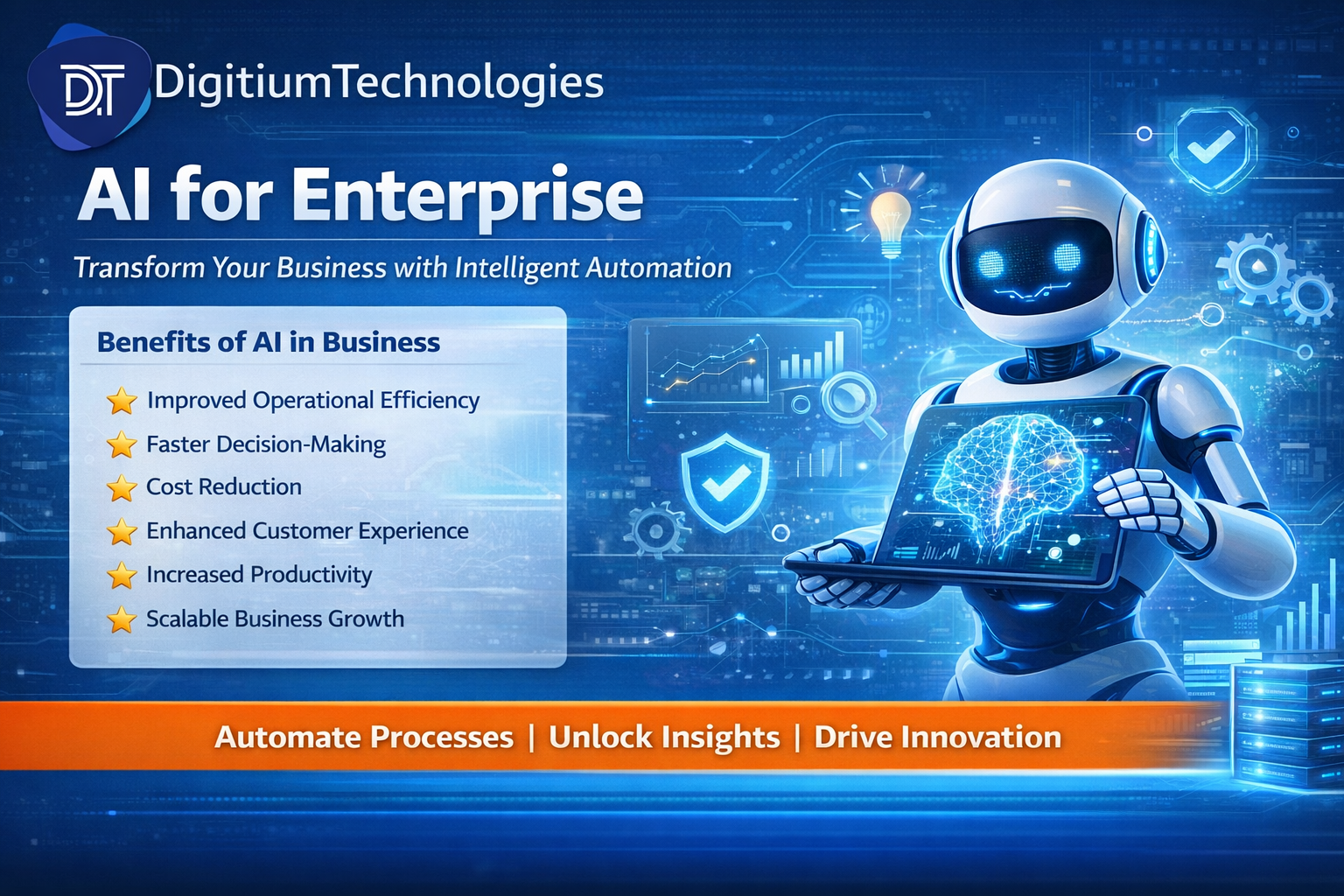
Key Benefits of AI in Business
Implementing AI for enterprise offers several important advantages:
1. Improved Efficiency
AI automates repetitive tasks, saving time and reducing manual work.
2. Faster Decision-Making
Businesses can analyze real-time data and make smarter decisions quickly.
3. Cost Reduction
Automation reduces operational costs and improves resource usage.
4. Better Customer Experience
AI chatbots and assistants provide 24/7 support with faster responses.
5. Increased Productivity
Employees can focus on high-value tasks instead of routine processes.
Common Use Cases
Organizations are using AI for enterprise in multiple areas:
• Customer support automation with AI chatbots
• Predictive analytics for sales and marketing
• Fraud detection in finance
• Supply chain optimization
• HR and recruitment automation
These use cases are helping businesses operate more efficiently and scale faster.
Challenges and Considerations
While the benefits are strong, adopting AI for enterprise also comes with challenges:
• Data privacy and security concerns
• High implementation costs
• Need for skilled professionals
• Risk of low-quality AI outputs without human oversight
Companies must plan carefully to ensure successful AI integration.
The Future of AI in Enterprises
The future of AI for enterprise is promising. More companies are investing in AI-driven platforms, automation tools, and intelligent systems. With continuous advancements, AI will become a core part of every business function—from operations to customer engagement.
Conclusion
AI for enterprise is transforming how businesses work, compete, and grow. By adopting intelligent technologies, organizations can improve efficiency, reduce costs, and deliver better customer experiences. As real-world examples show, companies that invest in AI today are building a stronger, more innovative future.